Thursday, November 8, 2012

Kerry Dwyer - Ramblings in Ireland - Guest Post

Guest Post
The journey that lead me to write the book

The journey in the book is only half the story of the journey of the book but I will start with that. As we were walking and talking the germ of an idea formed that I should write all this down at some time. Each day we went on a new journey together. In French the word journée means day or daytime that was very relevant to us as we journeyed not only through Ireland but through each others lives. Each day we found out a little more about each other. Although we have been together for years we had never spent quite so much time together alone and with nothing more to do than walk and talk.

When we came home to France I wanted to write the diary of the significant of this holiday. I started writing about the walks and the conversations and as my mind wandered off at tangents I started to write those down as well. When we had been in Ireland a lot of ideas had already started to formulate so the book almost wrote itself. It was a great pouring out of some things that I hadn’t thought about for years and some things that were very recent. They were all somehow linked together in that one week in that one idea. The story grew and changed and became the book. It was as I was writing the book that I realised how important that week had been and how Bertrand and I had moved closer.

I don’t find it easy to sit down and focus on something for a long time and I am not very good at finishing things. The number of projects I have half started is always growing. I became interested in the writing process and found some competitions on the internet for finished manuscripts. This gave me the impetus to get on and complete it. I always work better when I have a deadline. The book was duly sent off for the competition and came no where. It was bound not to really as I hadn’t had it proof read or edited or beat read. It was very raw. I didn’t mind that at all the competition had done its job and my manuscript was ready for the next stage. There was a lot to do when it came back from Beta and proof readers. I am lucky that I have friends who are very generous with their time and also not afraid to give criticism where it is due.

It was because of their positive feedback that I decided to go ahead and try to get the book published. I had not really heard of many people publishing their own books and people used ‘vanity press’ as though it were a dirty word so I tried to find a publisher. The rejection letters were not bad, they were obviously standard with the same lines virtually in each one telling me that I didn’t fit into their niche. The silences were worse I thought. Not one to flog a dead horse I resigned myself to the long list of would be published authors and put my book away. I was still in some way quite proud of the achievement, I had written a book. People had read it and liked it, even if they were my family and friends.

I had started a blog some time before the trip to Ireland. I tried to write at least a post a week and I was toying with the idea of posting parts of the book as blog posts. Then I had a problem with aligning my pictures. I couldn’t get the pictures on a particular post called ‘Eat that frog’ to line up. I asked for help on the social networks and I met Joel Canfield who kindly offered his assistance. He sorted out my picture problem and he had also explored my blog. He had found my proud post from when I had finished my book and was certain that some publisher would take it up and publish it. Joel sent me some of his snapshots from Ireland, I sent him some of mine. He wanted to know when my book would be published. This was our conversation via Linked in

Me ‘You might wait a long time to read Ramblings. I haven’t even had a nibble. I did think about doing it myself but I think if there has not even been a nibble from a publisher then it probably isn’t again good’.

Joel “I'm curious what makes you equate nibbles from publishers with quality? Publishers have one deciding factor: money. Unless they're sure your book will make more money than any other manuscript they've been offered, they'll ignore you. 

It has nothing to do with quality. 

If your story is worth telling, tell it. A good editor can take a good story and make it great. 

Don't wait to be picked. Pick yourself and ship your art.”

That was a very significant conversation. It lead me to not only being published but also to reassessing my feelings about my work, and its worth. I also discovered that hundreds of other worthy people with wonderful stories are doing just that.

Joel helped me to prepare my manuscript for publication and shepherded my though the process. We exchanged hundreds of emails and a few hours of SKYPE calls. He pointed out weak areas and helped me to make them stronger. So now I am a published author and that is still not the end of the story. Without the backing of a big publicity machine like one of the big publishing houses I need to make my work visible to my potential audience. So that it what I am doing. I am seeking reviews by sending out hundreds of review copies and I am giving author interviews and guest posts in the hope that I make myself a little more visible. To write is human to be read divine.

My family

My friends and family are all really thrilled for me and very supportive. My mother did the artwork for the book for me. She is a Chinese water colour artist and she painted the picture of the Beara peninsular for me. She has been a great support throughout, reading excerpts and allowing me to tell some of her stories in my book. My dad read a very early draft and his comments were really helpful in pulling together the final version. My husband doesn’t read in English so it was difficult for him to relate to this book. He is very proud that I have a published book and was so supportive and helpful when I wanted the time to write. I hadn’t told him that I had dedicated it to him. He bought it on his Kindle and was very moved. He has since read the whole book which shows dedication and devotion.

About the book

Ramblings in Ireland is the story of one particular walking trip and the memories and musings that it inspired. It is not a guide book for rambling in Ireland British ex-patriate Kerry and her husband explore the West of Ireland. Kerry’s inability to read maps and Bertrand’s insistence that she leads means that they inevitably go off the beaten track. This leads them to reflect and reminisce on upon accents and accidents, family and friends, love and what it means to be alive. It is a book with a lot of meanderings and tangents. Kerry discuses French versus English and Irish culture viewed through her own and her husband’s eyes. She talks about life in France and growing in England.

Ramblings in Ireland, Excerpt

After the hardware shop we found a small supermarket and bought some lunch to take on our walk that afternoon. I needed to buy some shampoo as well. I had put the empty bottle into my wash bag instead of the full bottle. We had used the shampoo provided at the B&B.

I was selecting some cold meats and salads from the chill cabinet when I heard Bertrand call me excitedly from the sandwich counter. I went over to where two shop assistants were serving freshly made hot and cold snacks to take away. What had excited Bertrand so much was the “deal of the day” – Full Irish Breakfast in a baguette.

What more could a French man want out of life?

We bought one for Bertrand. I chose what I wanted and we drove up the Beara Peninsula. The car soon filled with the smell from the still-warm ingredients in the baguette. We had to pull into a lay-by so Bertrand could wolf down his second breakfast of the day, improved immeasurably with the addition of French bread.

price: $9.99 paperback, $3.99 ebook
number of pages: 160
genre: Non-fiction - travel memoir
publisher: Someday Box
release date, 15 August 2012
buy links: Amazon, Barnes and Noble


About the Author

Kerry Dwyer was born in the North of England and educated in the South. She worked in finance for more than two decades in the UK, USA and various countries in mainland Europe. She now lives with her husband and daughter in the South West of France. Following the birth of her daughter she gave up finance and retrained as an English teacher (TEFL). She currently teaches English as a foreign language to adults by telephone and internet. Ramblings in Ireland is her first novel.

Links to connect with Kerry:

Facebook
Twitter
web site/blog
YouTube 

Wednesday, November 7, 2012

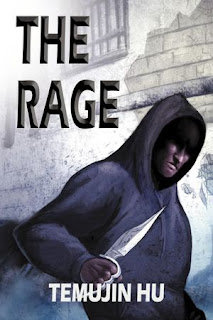
Temujin Hu - The Rage - Author Interview

Author Interview

1. Who is the plot based around?
ROLAND is a very discouraged and bitter young man who believes crime is his lot, and immerses himself in this role even to the point of murder.
NICOLAS is successful and comfortable with a loving family until Roland takes much of it away, and the depression becomes an obsession with revenge that leads to a criminal life.
VANESSA knows both men and cares for them, but when she chooses a career in law enforcement she is forced to hunt them down as criminals.
JANIE is a prostitute who crosses path with both men, encounters that change her life for the better until a criminal racket uses her as bait.
DARLENE is beautiful with a mystical power of seduction that she uses to control the various arms of this mysterious racket, which she serves loyally until her feelings get in the way.

2. What is the main idea of the plot?
Harsh times drive two men into increasingly horrific criminal behavior until they begin to struggle with their choices and the option of redemption becomes a distant dream. While one man seeks to build his own criminal empire starting with a small group of highly skilled miscreants, the other hunts him down with a ruthless obsession for revenge.

3. When does the plot take place?
It is contemporary without any references to a specific year. The story spans five years, Roland is 17 when it begins and he’s 22 when it concludes.

4. Where does the plot take place?
The story takes place in various cities in America with one chapter taking Roland’s gang to Mexico. Cities are not specifically named, allowing the reader to associate the characters with what is most familiar and drawing the reader more deeply into the story.

5. Why did the plot develop the way it did?
The question that drove the story was, “When does a wicked man lose all chance at redemption?” The characters had to be pushed into extremes of action to the point of seeming irredeemable while keeping them sympathetic enough that the reader never gives up hope on them changing.

This isn’t how the story idea began, though. I started with the question, “When is it okay to kill?” But as I grew in my Christian faith, the question became, “Why would a good man die for an evil man?” This was back in my more legalistic days; life has taught me that no one is truly righteous (least of all me), and that’s why I ultimately took away the “good” guy and made both men criminals. The theme determined the plot.

6. How did you come up with the idea for the plot?
My life experience infused itself into this story in more ways than I intended. I called the book The Rage because of my personal experience with depression, self-hate, and the sometimes erratic thoughts that I have had to battle. The “rage” experienced in the book refers to a strained emotional state that weakens character and judgment, causing bad decisions. There have been times I’ve felt capable of making the same choices as my characters, and yet strangely I’ve been able to manage my depressions without ever needing therapy. However, my mental health has not been culpable for all of my mistakes; I simply make enough bad decision to feel incapable of judging even the harshest of criminals. I had to tell a story about grace taken to an extreme.

Also, I’ve traveled all over the world as a student and for security work, and in the various jobs I’ve had I consistently meet people who tell me the same thing: people just don’t feel capable of being “good enough,” and give up trying. I’ve also met combat vets and seen how PTSD has changed their thinking, messed up their lives, and even altered their personalities. Trauma can drastically affect people. And I have worked with people out of a rehab who were trying to escape their lives of drugs and crime, and that’s a tough road to travel. It seems everything is stacked against these people who are honestly trying and struggling to get away from destructive lifestyles. All of these experiences affected the creation and development of Roland and Nicolas in the story.

One other thing: I grew up an Army brat, left home and joined the military, left the military to complete my degree, but then left America to do security in war zones. It should be no surprise that I am writing a story about killers.


About the Book

The Rage is a gripping drama of two young men whose lives become catastrophically entangled.

Roland's broken life drives him to the unthinkable crime of murder. This event destroys his emotional state and pushes him into a drug and murder binge, leading a darkly fascinated media to label him the “Red Ghost.” Although he fights to pull his life back together, his bitterness leaves him no other path but a criminal lifestyle, and he becomes an extraordinarily good criminal. He perfects his use of steroids, becomes a master thief, develops a network of criminal connections, and finally decides to put together his own gang. Along the way, he falls in love with another lost soul named Janie.

Nicolas is a young, ambitious businessman when he survives Roland's assault on his family. But the tragedy changes the course of his life as he obsesses over finding the young killer and training in various forms of combat to prepare himself for their next encounter. As he becomes a dangerous man, he falls away from normal society and loses his job along with any sense of the man he was. The sisterly affection of Vanessa, a friend of his wife, isn't enough to keep Nicolas from ending up living in alleys. He almost surrenders his quest for revenge before joining with a biker gang that crossed paths with Roland once.

After a few years and many sacrifices, both of these men begin to realize the depths of their depravity, but the path to redemption is not a straight one. Vanessa becomes a federal agent and finds herself hunting her friend like he was an outlaw while a mysterious criminal racket simultaneously tries to recruit Roland and kill off Nicolas. These events lead to a kidnapping and a conclusion that brings all of the characters together in a clashing that can only end in blood.

Price: Kindle: $0.99 Print: $15.99
Pages: 294
Genre: Inspirational Crime
Publisher: Badlander Publishing
Release Date: October 2012
Buy Links: Kindle, Amazon 


About the Author

Temujin Hu is a hard-working American living rather like a nomad. At 36 years of age, he's moved about 36 times and at one time or another called "home" California, Texas, Colorado, or five other states as well as Germany, China, and Kuwait. In 2003, he graduated from the University of Southern California with a B.A. in East Asian Languages and Cultures. He served over four years in the US Navy in the 90's and recently spent more than six years doing professional security in Los Angeles, Kuwait, Iraq, and Afghanistan. He also ran a small family-owned internet business for a couple years. He’s a Christian who spends a lot of time in the Word, and his interests include mixed martial arts, international relations, and dogs. Hobbies include hiking and shooting guns, but mostly he loves being an American and wants everyone to believe they can climb mountains.

Links to connect with Temujin:
Website  
Facebook  
Twitter  

Tuesday, November 6, 2012

What I'm Reading Now - Gilded Wings: The Angel Chronicles, Book 2 by Amy Lignor

Buy Link: Amazon

The Beloved Angel/Warrior Team from Until Next Time Returns!

When Matt and Emily are sent on their second mission they have no idea how truly dark human nature can become…

Emily never wanted to face humans again. With the heartache that went on down below, she’s still trying to figure out how to save souls that don’t deserve saving. The only one she wants to see again is Jason - the young man she fell in love with who became the soulmate she simply can’t forget…

Matt was trained to protect and defend the souls down below. Longing to feel the heartfelt emotions that come from being human, Matt wants nothing more than to have just one life - one chance - to live and love the girl of his dreams…

The powerful team find themselves in a brand new century, living in the Gilded Age of New York City. Emily takes over the body of Anya, a young Russian girl who arrives on Ellis Island after a hideous tragedy. There she meets up with a strangely familiar young man by the name of Drew Parrish, who helps Anya survive in an unknown world of luxury, snobbery and…obsession.

What Anya’s inner angel doesn’t know is that the soul she loves is also back. This time around Jason goes by the name of Max Carrow. Once a quiet and kind boy, he’s now part of the ‘Four Hundred Club,’ and wants nothing more than to be among the most admired as he climbs the shaky ladder of society’s elite.

As two worlds merge, Emily and Matt struggle under the weight of their “Gilded Wings.” Not only will they have to figure out who they should fight to save, but they must also face a romantic choice that could destroy them both.

Friday, October 26, 2012

What I'm Reading Now - Owlet by Emma Michaels

Buy Link: Amazon

Somewhere between falling and flying… there is a girl.

Iris has a secret. She lost her memory eight years ago and never told a living soul. After an asthma attack one night she finds out that her dreams of a strange house on a snowy island may be a memory resurfacing but the more she learns about the past the more she realizes the life she has been living is a lie. As the façade her father has built starts to crumble around her she will have to decide which means more to her; the truth or her life.

Wednesday, October 24, 2012

What I'm Reading Now - The Color of Snow by Brenda Stanley

Buy Link: Amazon

Can a troubled young girl reenter society after living in isolation?

When a beautiful 16-year-old girl named Sophie is found sequestered in a cage-like room in a rundown house in the desolate hills of Arbon Valley, Idaho, the entire community is shocked to learn she is the legendary Callidora--a baby girl who was kidnapped from her crib almost seventeen years ago and canonized in missing posters with portraits of what the fabled girl might resemble. Authorities soon learn that the cage was there to protect people from Sophie, because her biological father believes she is cursed.

Sophie is discovered after the man she knows as Papa, shoots and injures Damien, a young man who is trying to rescue her. Now, unsocialized and thrust into the world, and into a family she has never met, Sophie must decide whether she should accept her Papa’s claims that she is cursed and he was only trying to protect others, or trust the new people in her life who have their own agendas. Guided by a wise cousin, Sophie realizes that her most heartbreaking challenge is to decide if her love for Damien will destroy him like her Papa claims, or free her from past demons that haunt her mind.

Tuesday, October 23, 2012

Suzanne Stroh - Tabou - Author Interview & Giveaway (explicit content warning)


Due to a lack of entries, there is no giveaway winner.

About the Book

Teenage brewing heiress Jocelyn Russet begins her Odyssey as erotic love and adventure collide with hidden desires, forgotten memories and secret histories in Book One of the five-part TABOU saga.

When disaster strikes after pursuing her heart's desire in a Swiss ski chalet, Joss locks horns in a London ballroom with another fiery, powerful heiress from a different generation: Patience Herrick, daughter of the three-time American ambassador to Britain. Their fireworks launch a double coming-of-age story that jets from Madeira to Capri, from Paris to Boston, with its unexpected climax in New York's '21' Club.

Why can't they remember their first meeting in the Virginia countryside when Joss had been a girl of six and Patience had been a raging addict? What key does this forgotten memory hold, ten years later, as revenge strikes and terror looms in Los Angeles?

Meanwhile, Joss fights dynastic pressures. "Show me the legacy of a lesbian couple," challenges her English mother.

“A girl could be born rich, but nobody was born a hero," as Joss soon discovers on the eve of a first date that will rock her world and change her life forever.


Author Interview

1. Please tell us about your current release.
Patience launches my sexy quintet of novels, TABOU, a saga that spans 100 years on four continents and recounts the erotic Odyssey of Jocelyn Russet, the 27-year old brewing heiress born in London and raised in the Virginia countryside.

In each book, Jocelyn meets her destiny on one big night, when her fate turns on secret histories and forbidden encounters with a different woman every time. The novels interlock, as in The Alexandria Quartet by Lawrence Durrell, and they can be read in any order, thanks to the Prologues that open each novel and the indexes that help readers keep track of the cast of characters. The whole project hearkens to the heyday of the 19th century novel, where readers could immerse themselves in detailed worlds peopled by dozens of characters. Edgy, modern action and full-spectrum erotic writing updates the series to give it a “classic modern” feel.

Book One is a double love story that is part rollicking adventure, part sexy romp through the glittering 1980s and 1990s, set in London and Los Angeles. It’s the tale of two British-born heiresses of different generations, Jocelyn Russet and Patience Herrick, both coming of age at the same time. Are they made in heaven, or star-crossed? What forgotten memories do they share, what secret legacies must they uncover and take charge of, and why are their families being targeted for terror?

2. Can you tell us about the journey that led you to write your book?
TABOU began as an unproduced Hollywood screenplay that focused on Jocelyn and Sylvie Russet and Jocelyn’s climbing partner, Zander Duffield. It fulfilled the basic requirements of good drama: three act structure and a compelling narrative with a love interest and an antagonist. I dreamed of Catherine Deneuve in the role of the 45-year-old Cognac heiress, Sylvie Russet, in the vein of INDOCHINE, the blockbuster epic Deneuve had just starred in so magnificently, but the movie project fell through.

My characters had really come to life, and now they wouldn’t let me go. Early on, I realized that there were deeper stories I wanted to tell about how love and Eros, business and spy craft, run in families just like other heritable traits. Telling stories that spanned four generations or more required a format more ambitious than film, or even a single novel. It took years for me to find the right “glue” that would bind nine families together on four continents over four generations. The day I realized Patience Herrick was an epic heroine strong enough to parry Jocelyn and Sylvie, with her own family business story that could carry a quintet, I knew I had a series on my hands. Aurore de Fillery and Valerie Drummond, Countess of Tiffin and Ross, sprung out of that seed. And soon I could see the organic whole taking shape.

So Book One of TABOU is a love letter to the real Patience. She is one of only two characters in TABOU modeled closely after a single person; the rest are truly composites.

TABOU is not autobiographical fiction, but it does draw deeply from my experience, and it is fair to say that as a mountaineer, motorcyclist, screenwriter, field medic and family business specialist based in the Virginia countryside, I truly live what I write about in TABOU.

I worked feverishly on the first draft of TABOU six days a week while still nursing my baby daughter, completing it in about seven months. Then I took a break and re-read a lot of period biographies, along with two great novel cycles from the late 1950s that compliment one another and balance the stylistic influences of TABOU.

First I re-read The Alexandria Quartet, a literary masterpiece by Lawrence Durrell, whose artistic aim was to explore the four dimensions of love in an era when Einstein had just discovered time as the fourth dimension of space. I followed that with another run-through of the Peter and Charlie Trilogy by Gordon Merrick, published after Merrick’s death from 1959-1961. This was a serious work of literary erotica by a successful author of gay “potboilers,” his explicit, homoerotic romances that critics had ghettoized. Merrick was a major talent. But as E.M. Forster had done with Maurice, he refused to publish the Peter and Charlie books during his lifetime. The subject matter was too taboo.

No longer! What really gripped me about the Peter and Charlie books, besides the first class erotic writing, was the family saga. What other gay epic gave the heroic lovers children—and the struggles of parenthood pitted against Eros? Merrick was taking Durrell’s “fourth dimension” (the enduring powers—both creative and destructive--of love over time) to the next level. Literary giants like Forster, Lawrence, Woolf, Sackville-West and others had dreamed about it—but never accomplished it. I wanted all that sexy continuity for TABOU…and more.

For readers around the world, generations of their own family histories have been lost because of taboos that forbid truth telling about the wide range and variety of sexual desire and experience, not to mention its power to transform history. Helen’s face launched 1,000 ships, remember? Bosie’s charms landed Oscar Wilde in prison. Who paid the price? Who inherited the spoils?

Historians and biographers have become franker in writing colorful and meaningful gay, lesbian and bisexual lives. Recent biographies of Alan Turing and Walt Whitman vie with my personal favorite by Victoria Glendinning, Vita, in the pantheon. But the living legacies of these lives remain unclaimed by their heirs, or else squandered. Who knows the adventures of her great-great gay uncle, or the heroic deeds of his three-greats lesbian aunt? Greta Garbo’s niece threatens legal action against those who pry too deeply into Garbo’s life story, as if their consanguinity is still a threat. For those of us who crave connection and continuity across generations, James Joyce made much of the difference between spiritual paternity and actual paternity in Ulysses, but does anybody remember? Dolly Wilde told anyone who would listen, in Paris between the wars, that she was more like her uncle Oscar Wilde than he was like himself. But when she died, that continuity appeared to have vanished…until, out of the blue, Jamie O’Neill wrote a brilliant novel called At Swim, Two Boys, which revealed him as the spawn of the gay Wilde and the hetero Joyce. Why have so few talented writers addressed this huge gap in consanguinity and continuity between us and our queer forebears?

This is the great question that spurred me on through many drafts to finish and publish TABOU now. My mission: to mind the gap. Then to bridge it, one erotic fiction at a time, since we have lost the links in the real human daisy chain over the last century.

I bring an unusual perspective to TABOU. As a descendant of John Hart, who signed the Declaration of Independence on July 4, 1776, and as a fifth-generation owner of the international Stroh’s brewing business that had been in my family since 1848 in America, then back to 1509 in the Palatinate (Germany), it seemed like nowhere was this yawning gap more visible than in my own milieu. So I built the mythology of TABOU around the world I was born into and raised in and now pass down to my daughter: the world of political dynasties and business families that bears some resemblance to the Olympian heights. Here on Earth, with the help of the “chattering classes,” it’s a world that has taken such painstaking care to trace its own history from generation to generation for centuries. But it’s a history that has left out the biggest change agent of all: the wide variety of sexual experience that perennially inspires us, nourishes our souls, enlivens our art, and strengthens our connections between love and Eros in every generation.

I don’t want to spoil it for you, but one of my beta readers summarized what I’d accomplished like this: “At first I was like, ‘who are these people?’ And then I got it! They’re dripping rich and saving the world!”

3. What book on the market does yours compare to? How is your book different?
TABOU is a literary reader’s Fifty Shades of Grey, without the BDSM. It has great sex writing, like Fifty Shades of Grey, but it is neither mommy porn nor genre fiction built on the formula for stock erotica. The gaps between the sex scenes are much longer, and those gaps are filled with more intriguing plots that involve many more characters. It also presents all kinds of couples in love: gay, straight, bisexual, single and partnered, young and old, able-bodied and disabled, faithful and unfaithful to their spouses.

Like the novel series by Edward St. Aubyn, TABOU is set in a glittering world of bluebloods and elites. But these elites are not your typical “1%.” Unlike St. Aubyn’s abusive elites, TABOU’s international elites are productive, not destructive. They are on a mission led by a moral code, a reason for being—a higher purpose that is revealed progressively as characters accept hidden legacies and face life-threatening challenges after discovering secret histories.

4. What would you say is your most interesting writing quirk?
I’d start with the sex writing. Very little literary fiction published today has truly great sex writing in it that explores the full range of sexual experience. And almost no erotica delivers the deep satisfaction of a good literary novel. My work bridges this gap. You won’t find hot sex every 30 pages, as in genre fiction. But you’ll keep every volume of TABOU by your bedside, no matter whom you share your bed with!

My writing is a personal blend of deep artistic influences in several genres, including biography, giving rise to some unconventional quirks. One of my goals has been to counteract the predictability of so much contemporary fiction, in part by re-inventing the experience of really getting lost in a juicy 19th century saga peopled with dozens of fascinating characters, each with his or her own vivid storyline. To make it easier for readers to follow all the characters, I’ve provided character indexes, the way a biographer would index a biography.

Technically, TABOU requires commitment from the reader, in the way that the music of Kanye West is challenging—but worth it. It’s not a breezy read; nor is it a slim volume. It takes at least 100 pages to “get into” a novel cycle this big, but then you’re hooked, if you’re like 50% of my beta readers who became addicted! TABOU’s pleasures are deeper. They grow on you.

For instance, TABOU is ambitious in throwing out the conventional linear narrative in favor of the pleasures of being able to peek into the future and to jump back into the past instantaneously. A benefit of blending the past, the present and the future together in every book is that you can read the books in any order. It’s kind of like enjoying the possibility of multiple endings in a computer game. You will have a unique experience of TABOU, depending on how you choose to read it. The dual narratives begin, in Book One, on the same March day in 1993 and 2003, each progressing from there. You know you’re in a flashback, recalling past events, when you see dialog ‘in single quotes like this.’ Dialog in the main story “looks like this.” And future events are written in bold italics. You won’t get confused because all this is explained in the Author’s Note that appears in the end matter of every TABOU eBook.

Readers will also notice lots of interior dialog, reflecting multiple points of view, along with lots of verb phrases in my books. Screenwriting has taught me to craft edgy sentences that begin with verb phrases. It’s a screenwriters’ convention that energizes the pace and adds immediacy to the narrative.

5. Open your book to a random page and tell us what’s happening.
It’s 4:00 p.m. in Los Angeles in 1993 at the height of the “British invasion” of Hollywood. Patience Herrick, daughter of the three-time American ambassador to Great Britain, pretty much rules the city’s social calendar. Tonight she needs to get out of throwing a dinner party in Bel Air for a French champagne princess, where the Hollywood elite will mingle with the US Vice President—all so she can celebrate her tenth anniversary with Jocelyn Russet, the love of her life, the brewing heiress Patience seduced in a London ballroom. So tonight is a date made in heaven—that Patience completely forgot about.

She calls her best friend Calandra Seacord for help. Calandra can definitely host the party in her place; she’s Greek and gorgeous, an Arianna Huffington double, married to the man running for Governor of California. Calandra and Patience grew up together in London. Patience knows her well and loves her like a sister. But Patience doesn’t know everything. Calandra is a secret agent working for the champagne princess, hunting down unprosecuted Nazi war criminals, kidnapping them, and bringing them to mock trials in order to recover stolen assets. Calandra can’t risk being seen socially with the princess, so she has to make up a plausible reason why she can’t do this important favor tonight for Patience.

There’s another problem: Patience is a world-class judge of character. Nothing slips past her. Calandra can’t let Patience on to her secret. So in order to distract Patience, Calandra reveals the biggest secret of Patience’s life. And when she does, Patience begins a journey of recalling lost memories that will change her life forever….starting with her anniversary date tonight….

6. Do you plan any subsequent books?
Book Two, Jocelyn, is now available. Book Three, Sylvie, will go on sale in time for the 2012 holiday season. The cycle will conclude with Books Four and Five in 2013. Each TABOU book features a sneak preview of the next book.

7. Tell us what you’re reading at the moment and what you think of it.
I’ve always got a few books going at any given time. I love reading in multiple genres. Do you?

In erotic fiction, I’ve started Fifty Shades Darker by EL James, and while it’s a fun, breezy read with the sex writing as good as ever, I’m not surprised to find the thin plot growing even thinner. I love to read great sex writing, but I like it in better taste and more measured doses with deeper character development, more going on with more characters, and exciting story lines. I much preferred The Last Nude by Ellis Avery, which I devoured, almost in one sitting. It’s about the cocaine-fueled obsession of Modernist painter Tamara de Lempicka for her 17-year old model Raphaela, whose portraits secured Lempicka’s rock star status in Paris between the wars. I’m also reading Afterimage by Helen Humphreys, the fictional account of another muse obsession, this time by pioneer English photographer Julia Margaret Cameron for her housemaid.

Two graphic novels have captured my attention. I just finished really Alison Bechdel’s Fun Home. It’s the first work by Bechdel I can really connect with. It’s a very compelling, but heavy, memoir by a Midwestern intellectual whose closeted father took his own life when Alison came out as a lesbian. I’ve turned now to Logicomix, the story of Bertrand Russell’s quest to lay a unified foundation for mathematics, set in Edwardian England and beyond. Apart from The Invention of Hugo Cabret, it may be the most beautiful graphic novel I’ve ever read. It took four authors and artists to make it: Apostolos Doxiadis, Christos Papadimitriou, Alecos Papadatos and Annie Di Donna. What a cool collaboration.

Nonfiction titles are always by the bedside and on my Kindle. By the bedside is Marina Warner’s scholarly book about the Tales of the Arabian Nights, Stranger Magic. It’s well researched and beautifully published. Comprehensive. Kate Summerscale’s biography of Toughie Carstairs, The Queen of Whale Cay, made me laugh out loud. She was the very butch Standard Oil heiress who ran an ambulance unit in World War I and then became “the fastest woman on the water” racing hydroplanes between the wars. My father would have seen her challenge the Harmsworth Cup on the St. Clair River in Detroit in 1929 and 1930. After she lost both races, Toughie retired to the Bahamas, where she became the autocratic ruler of her own island.

I try to read in French as much as I can. Right now I’m gripped by Francesco Rappazzini’s biography of Elizabeth de Gramont, set in Paris during the first half of the 20th century, which has never been translated. The “red duchess” Lily de Gramont, from one of France’s oldest families, was Proust’s fact-checker; she was the best friend of the man Proust pined for; and she was the only woman Natalie Barney could never control: they were lovers for 45 years. If you don’t read French, you can get an idea of “Natly’s” escapades with Lily de Gramont in Diana Souhami’s wonderful and hilarious book, Wild Girls.

***

Tabou can be purchased at:
Kindle, Nook, MyBookOrders.com

Price/Format: $2.50 ebook
Pages: 463
Publisher: Publish Green
Release: October 11, 2011


About the Author

Suzanne Stroh is a screenwriter and film producer, author of published case studies on family business. She grew up in Michigan where her family brewed Stroh’s beer for five generations. She studied art history at Wellesley College and Newnham College, Cambridge then worked in the New York art world before turning to writing. A mountaineer and field medic, she lives with her family in the Virginia countryside. TABOU is her first novel.

Connect with Suzanne:
Web Site
Facebook
Blog
YouTube
Blog Tour Site


About the Giveaway

Leave a comment with your email address to win a PDF of Tabou. Ends 10/31/12.

Monday, October 8, 2012

Deb Elkink - The Third Grace - Author Interview

Author Interview

1. Who is the plot based around?
MARY GRACE KLASSEN (a.k.a. AGLAIA) is a big-city costume designer; FRANÇOIS VIVIER (a French summer exchange student) jilted Aglaia when he fled back to Paris fifteen years ago; DR. LOU CHAPMAN (Aglaia’s mentor) is a self-serving professor; EBENEZER MACADAM (Aglaia’s boss at Incognito Costume Shop) is a fine, mystical old gent who has her best interests at heart.

2. What is the main idea of the plot?
A costume designer, overwhelmed by memories of the summer she was seventeen and fell in love with the French exchange student visiting her parents’ farm, discovers amorous notes he jotted long ago into the margins of a Bible he left behind. She’s now on her way to Paris looking for her old flame—and herself.

3. When does the plot take place?
The story unfolds in “Aglaia’s” world today, with many flashbacks to the summer “Mary Grace” was seventeen.

4. Where does the plot take place?
The Third Grace is set on the streets of Paris, a farm in the sand hills of Nebraska, and the city of Denver.

5. Why did the plot develop the way it did?
My characters have strongly juxtaposed values. Aglaia, running from her past but unable to escape the memories, views her mentor as a model of success and the key to artistic validation; meanwhile, Dr. Lou Chapman is playing her. Eb MacAdam, Aglaia’s boss with his own life regrets, has plans to prosper her and give her a hopeful future. The plot grows out of the dark mythology that François murmurs into Aglaia’s ear, twisted in with elements of death, abandonment, and avarice, with friendship, faith, and family.

6. How did you come up with the idea for the plot?
I discovered a marble statue grouping in the Louvre on my first trip to Paris in 1989—a Greek Renaissance sculpture by James Pradier of The Three Graces. These goddesses became iconic for me and I decided to arrange my debut novel around them, as they symbolized the relationships between women as well as the twisted spirituality implicit in mythology—both relationship and theology of great interest to me. I was at this time still living on our isolated cattle ranch on the Canadian prairies, and the contrast between city and country, aesthetics and common sense, sophistication and practical living really hit home. I’d succumbed to the enchantment of French culture (the cuisine! the couture! the romantic language!) and wanted to explore the contrast between it and my own heritage rooted in the Mennonite faith—to say nothing of my intention to relive that teenaged feeling of falling in love.


Book Summary

Back when she was seventeen, Mary Grace fell in love with the French exchange student visiting her family’s Nebraska farm. François renamed her “Aglaia,” after one of the enchanting Three Graces of Greek mythology, and set her heart yearning for something more than her parents’ simplistic life and faith. Now, fifteen years later, Aglaia designs costumes in Denver, and her budding success in the city’s posh arts scene convinces her that she’s left the farm girl far behind. But “Mary Grace” has deep roots, as Aglaia learns during a business trip to Paris. Her discovery of sensual notes that François jotted into a Bible during the long-ago fling, a silly errand imposed by her mother, and the scheming of her sophisticated mentor all conspire to send her on a dual journey across oceans and time in a search for herself.

Price: $14.99
Pages: 306
Genre: Contemporary Women’s Fiction
Publisher: Greenbrier Book Company
Release Date: December 1, 2011
Buy Links: Amazon, Kindle, Amazon Canada, Barnes and Noble, Nook, Chapters/Indigo, Kobo


Author Bio

When author and city-slicker Deb Elkink fell in love and married an introverted cowboy, she moved from her bright lights to his isolated cattle ranch far off in the prairie grasslands. Still—between learning to pilot a light aircraft, sewing for a costume rental store, and cooking for branding crews of a hundred—Deb graduated with a B.A. in Communications from Bethel University in St. Paul, MN; she also holds an M.A. in Theology (both summa cum laude).

Her award-winning debut novel, THE THIRD GRACE, is set in the contrasting locales of Parisian street and Nebraskan farmyard, and incorporates Greek mythology and aesthetics with the personal search for self. Her writing has been described as “layered and sumptuous,” “compelling,” and “satisfying.”

Links to connect with Deb:
Web site
Facebook
YouTube