Showing posts with label author interview. Show all posts

Wednesday, February 20, 2013

G. Jay - Summer Spirit - Author Interview & Giveaway


Congratulations to our winner!
bn100candg (at) hotmail (dot) com

About the Book

Ryan Kinkaid, a successful gay Manhattan antique dealer has had it with life in New York City, especially his random love life. Ryan has what most New Yorkers want — his own successful business, and a mortgage-free brownstone on West 71st Street. However, at age forty-one he discovers he is lacking one very important thing in his life: a meaningful and loving relationship. With summer just around the corner, the approaching heat and his restlessness are reasons for his escape from the city. A four-month rental in historic and picturesque Portsmouth, New Hampshire, with his best friend Lauren was the answer.

Renting a house built in 1810, kindred spirit Nicholas reaches out for contact, and Ryan finds himself wanting to know about the past. However, Nicholas is not the only one wanting Ryan’s attention. Ty, a handsome local man, also has strong desires for Ryan.

The stark contrast of the past collides with the present in this tale of lost and betrayed love, and irrational and undying prejudice.

In the end, all that is left is the affirmation of the value of honesty and commitment in love.


Author Interview

1. Can you tell us about the story behind your book cover?
The main graphic on the cover is a male figure. This figure can represent one of two male characters in the book, Ryan Kinkaid or Nicholas Walsh. In each case, the characters are unfulfilled until this certain summer where love and contentment gives life and color, uplifting their spirits.

2. What would you say is your most interesting writing quirk?
I don’t know if it’s a quick, but I do not outline the book beforehand. I let the story happen as I write it.

***

Summer Spirit can be purchased at:
Kindle, Nook, iBookstore, MyBookOrders.com

Price: $3.99
Pages: 132
mobi ISBN: 9781938008665
ePub ISBN: 9781938008672
Publisher: Publish Green
Release: October 15, 2012


About the Author

A communications graduate of the City Universities of New York, and after twenty-nine years as a human resources administrator, Jay decided to apply his understanding of the complexities and foibles of the human character in a more creative way.

Like the main character, Ryan Kinkaid, Jay is a gay man who believes in love and commitment. He and his husband have been together for over thirty years and live on the West coast of Florida with their two cats. A transplant from New York, Jay continues to travel regularly to Portsmouth, New Hampshire, to connect with the New England life which he so loves.

Connect with G. Jay:
Web Site


About the Giveaway

Leave a comment with your email address to win an ebook of Summer Spirit. Ends 2/28/13.

Thursday, February 14, 2013

Frank Nappi - Echoes from the Infantry - Author Interview & Giveaway


Congratulations to our winner!
bn100candg (at) hotmail (dot) com

About the Book

Echoes From The Infantry is the tale of one Long Island World War II veteran, the misery of combat, and the powerful emotional bonds that brought him home to Rockaway Beach and the love of his life, Madeline Brandt. It is about a father and son, and their ultimately redeeming struggle to understand each other's worlds - one a world at war, the other shaped by its veterans. Nappi moves artfully between the present and past, weaving a fictionalized tale of this Long Islander's struggle to reconcile with the demons from long ago and his family's neverending battle with many of the intangible burdens caused by the private life of a man they never really knew. He touches our hearts with a story of courage and perseverance...a story of men who faced the greatest challenge of their generation.


Author Interview

1. Who is the plot based around?
Echoes From The Infantry was inspired by my fascination with the WWII period and a very special relationship forged between me and and two WWII veterans, Mr. Bill McGin and Mr. Eddie Hynes, both of the 95th Infantry Division of the United States Army. Some years ago, as a way of enhancing my students' understanding of WWII and the haunting experiences that many soldiers had, I invited my McGinn and Mr. Hynes to my classroom to share their insights with my classes. It was and still is the most rewarding moment I have ever had as a teacher.

I watched and listened as these two men captivated a room full of 16 year old students with their poignant reminiscences of their time in war-torn Europe, as well as the daunting specter of returning home, to family, friends and communities that just did not understand the unrelenting, insidious vitality of the war's residue. So many of our young men who fought valiantly in both Europe and Japan returned home damaged; true, they managed to elude the cold hand of death, and in many cases came back unscathed physically, yet they were damaged just the same; they remained mired in the cloud of combat for the rest of their lives. The atrocities they were forced to witness and engage in became indelible snapshots that infiltrated every facet of their lives. Everywhere they looked they saw the ruin, and the senseless violence. And when the closed their eyes, it was worse. Their was no rest from the "echoes from the infantry." Many of these men who made up our nation's "greatest generation" found it very difficult to function in the conventional sense, although they tried. However, it was an impossible task for many, and their family lives, as well as their professional existences, suffered because of their previous lives on the battlefield.

2. What is the main idea of the plot?
The novel, which is an amalgam of both fact and fiction, is the tale of one Long Island World War II veteran, the misery of combat, and the powerful emotional bonds that brought him home to Rockaway Beach and the love of his life, Madeline Brandt. It is about a father and son, and their ultimately redeeming struggle to understand each other's worlds - one a world at war, the other shaped by its veterans. It is a fictionalized tale of this Long Islander's struggle to reconcile with the demons from long ago and his family's neverending battle with many of the intangible burdens caused by the private life of a man they never really knew. It is also a story of courage and perseverance...a story of men who faced the greatest challenge of their generation.

3. When does the plot take place and where?
The setting of Echoes From The Infantry vacillates between war-torn Europe and the tiny town of Rockaway Beach, New York. James McCleary's time as a soldier during WWII is obviously set in several towns in Europe, while the scenes depicting his life post war are all limited to his hometown, which is Rockaway Beach. I chose Rockaway Beach for several reasons, the most compelling being that this is where one of the veterans on which the novel is based grew up. It is the sort of quaint, folksy, post WWII town that embodies so much of what America was about during this time period. The timeline of the story, consequently, covers a range of years from 1941 to around 2000.

4. Why did the plot develop the way it did?
Well, the story is told in a series of flashbacks and runs simultaneously on three tracks. Naturally, the war scenes are essential as they allow the reader entrance into the private world of James McCleary. The other two tracks chronicle James' life in Rockaway immediately following the war and in the subsequent years, and the present situation he is in with his family. The theme of war having a lasting effect of a soldier's life is conveyed easily and powerfully through this structure.

5. How did you come up with the idea for the plot?
As I watched and listened to Mr. McGinn and Mr. Hynes captivate a room full of 16 year old students with their poignant reminiscences of their time in war-torn Europe, as well as the daunting specter of returning home, I knew I had the makings of a very special story. So many of our young men who fought valiantly in both Europe and Japan returned home damaged; true, they managed to elude the cold hand of death, and in many cases came back unscathed physically, yet they were damaged just the same; they remained mired in the cloud of combat for the rest of their lives. The atrocities they were forced to witness and engage in became indelible snapshots that infiltrated every facet of their lives. Everywhere they looked they saw the ruin, and the senseless violence. And when the closed their eyes, it was worse. Their was no rest from the "echoes from the infantry." Many of these men who made up our nation's "greatest generation" found it very difficult to function in the conventional sense, although they tried. However, it was an impossible task for many, and their family lives, as well as their professional existences, suffered because of their previous lives on the battlefield.

Mr. McGinn and Mr. Hynes passed away after visiting my classroom for 10 consecutive years. It was a devastating loss for me that I still feel to this day. Both men became very dear friends of mine and shared things with me that they never thought they would ever tell anyone else. My most treasured possessions include countless letters from both men, and some videotape of their stirring presentations that influenced not only me but countless numbers of students.

As a tribute to both men, and to all of the WWII soldiers who suffered quietly from PTSD after the war, I wrote "Echoes From The Infantry."


Excerpt

Madeline came home to find James on the couch. She set her bags down and kissed his cheek. He was unavailable. He reminded her somehow of those German cities in ruin: not functioning and only remotely hopeful for a future. “My goodness, the stores were mobbed,” she said. “I’ve never seen anything like it.” He barely acknowledged her arrival. He was lost in the familiar practice of stuffing those goddamned socks under his arm. Those socks. How she hated those socks. More than anything. More than the way he sat in the living room of their home in the evenings, staring vacantly out the window into the darkness; more than the way he jumped to attention each time an airplane passed overhead or a car door slammed. Those socks. He had them squirreled away in every room. There were enough pairs to outfit all the New York Yankees.

They were more disconcerting than the way he ground his teeth while he slept or the way his mind drifted during moments such as these. She had tried. From the moment he came back to Rockaway, she tried to guide him gently toward his new life. She prepared all of his favorite meals. She made certain that the house was always warm. Fresh flowers adorned the tables in each room, and the soothing tones of classical piano insulated their home from the harsh sounds of the street, which always seemed to bring him back to the front line.

“Jimmy!” she admonished him. “Did you hear a word I just said?” Her arms were folded. The tapping of her foot on the oak floor echoed like a drumroll. “Yeah, yeah, Maddie. I heard you.” He pulled his hand out from under his shirt. His gaze was still off in the other direction. “Look, Jimmy. This has gone on long enough,” she said. “It’s time to live again. Time to be a husband again. Jimmy, please. Put those damn socks away.” They were the most difficult words she had ever spoken. She labored for weeks over how and when and even if she should. He was unpredictable and at times volatile, particularly when she questioned the reason behind what he was doing. This fear had held her voice captive. Until now. When she heard the words leave her lips, she was surprised, almost as if they were uttered by someone else.

“What did you say?” he responded, cutting her down with his icy stare. “Why would you ask me that?” She cowered in front of him like a frightened child. She did not answer. Why had she said anything? She should have kept her mouth closed, left him to his thoughts. Now she was reeling, and with nothing else to say, her silence enraged him. He grabbed her by the wrists and shook her violently, muttering something about soldiers and shell holes and Bastogne in the winter. She started to cry. He released her abruptly and stormed upstairs, leaving her crumpled on the floor.

She had bundled up his uniforms and his pack, buried them in his footlocker and tucked it all away neatly in a corner of the attic. She had hidden his souvenir weapons and photographs as well. Even the decorations he had received were placed out of his reach, in the back of her jewelry box. She thought she had covered everything, separated him from the world that still haunted him. But she had forgotten something. She sat on the floor, feeling stupid and childish. Dusk had crept through the window and there she sat, crying, wiping her eyes on her shirt sleeves. She did not want to feel this way. It was worse than any confrontation with James could ever be. She lifted herself off the floor, grabbed a bag, and gathered every last pair of socks he had, leaving only the ones under his armpit and on his feet.

She found him upstairs, sitting in the shadows of their bedroom, his head resting in the palms of his hands. “Jimmy,” she whispered. “I don’t know exactly why you are still carrying those socks. I’m sure you have a good reason. But you’re home now. You don’t need them, sweetheart.” She ran her hand gently across her protruding belly. There wasn’t going to be room for an extra pair of socks in the life Maddie had planned for herself and for her family. There were things now more important than socks, something inside of her, a new life, full of hope and promise. He needed to understand that. “Let me have them, Jimmy. Please. I want them.”

He rose slowly but said nothing. He slid his hands around her waist and locked them behind her back. Then he started to crumble. “I’m sorry, Maddie. I’m sorry. But I can’t. I can’t do it,” he said, choking on every word. “I can’t do it, Maddie.”

……she was right. Everything would be great. He could do this. Husband. Father. Plenty of guys did it. Why not him? He turned to her and opened his eyes. Her face was just a silhouette, glinting in the sheen of the moonlight. He pressed his mouth against hers. It was great. Everything would be great, he thought, if he could find a way to just forget.


***

Echoes from the Infantry can be purchased at:
Kindle

Price: $3.99
Pages: 256
Publisher: St. Martin's Press
Release: October 13, 2005


About the Author

Frank Nappi has taught high school English and Creative Writing for over twenty years. His debut novel, Echoes From The Infantry, received national attention, including MWSA's silver medal for outstanding fiction. His follow-up novel, The Legend of Mickey Tussler, garnered rave reviews as well, including a movie adaptation of the touching story "A Mile in His Shoes" starring Dean Cain and Luke Schroder. Frank continues to produce quality work, including Sophomore Campaign, the intriguing sequel to the much heralded original story and the just released thriller, Nobody Has to Know, which received an endorsement from #1 New York Times bestselling author Nelson DeMille. Frank is presently at work on a third installment of his Mickey Tussler series and his next thriller. He lives on Long Island with his wife Julia and their two sons, Nicholas and Anthony.

Connect with Frank:
Web Site
Blog
Facebook
Twitter
Goodreads
YouTube
Blog Tour Stops


About the Giveaway:

Leave a comment with your email address to win an ebook of Echoes from the Infantry. Ends 2/28/13.

Friday, January 25, 2013

G. Gordon Dean - Scam Factory - Author Interview & Giveaway


Congratulations to our winner!
bn100candg [at] hotmail [dot] com

About the Book

Whoever said 'white-collar crime doesn’t pay' never lived in Washington D.C. TierGroup is a business consultancy firm located in the heart of DC. Its Division Heads have a very cold and calculating unorthodox approach to conducting business. Protecting and serving their clients is the only thing that matters. Nevertheless, loyalty can swing both ways in this journey through greed, corruption, and absolute lack of accountability.

As a former Las Vegas Casino Surveillance Director, Michael Crayter, a straight shooter, becomes an unaware, almost, employee of TierGroup in mid-2001. His transformation takes many shapes from idea man to fraud guru. He embarks on a journey to Iraq, through Hurricane Katrina and eventually takes part in one of the biggest scams in the history of the United States - the TARP funding program. His boss, Charles “The Czar” Zarin, is the ultimate manipulation mentor. Michael Crayter’s experience will last for more than eight years and will make his old Vegas job seem like child’s play.

The investment opportunities the United States has to offer during this timeframe are seemingly endless and the public joins in on the greed. The whole country is riding high on the inflated value train with careless abandonment. There are no regulations followed or laws unbroken by the Mortgage Lenders, Stock Brokers, and Bankers. The bubble is getting bigger and the clock is ticking. It's every man for himself. Divide and conquer. Borrow and spend. No one sees the tsunami coming, except for Charles Zarin. Capitalism will be turned upside down and the money spigot will run dry.

By late 2007 the bubble bursts and our country’s economy is left in ruins. The Treasury is sent in to bail out the white-collar thieves. While losing most of its clients TierGroup and Michael Crayter are left to fend for themselves. The tables are turned on the fat-cat bankers who caused the meltdown. Michael Crayter uses his hard gained experience to get even with the fake bastards. Almost everyone loyal to TierGroup gets away with highway robbery and the American taxpayer is left holding the bag. Michael Crayter begins to tell his story, in this Four Part first-person narrative, during a 2005 interview at FBI headquarters in Washington D.C.


Author Interview

1. What book on the market does yours compare to? How is your book different?
That is a very good question. I had to do some research on this since SCAM FACTORY is a work of fiction. I only found one white-collar fiction book being sold today to compare it to: “RUDIGER” by David Lender. It had some of the same types of crimes committed in parts of my book. Several modern Nonfiction books, currently on the market, also include many of the same types of crimes that I wrote about. I didn’t have much luck, but it could be that I don’t know where to look. Maybe someone out there will find other comparable books and share them with us.

2. What would you say is your most interesting writing quirk?
Over all I can say that writing SCAM FACTORY is the biggest quirk because I only type with two fingers! I was not using the ‘Tab’ key where needed and hit the ‘Hard Return’ key too often, which made more than double the work for editing and formatting. This is my first novel and I am almost surprised that I was able to accomplish the challenging task of writing it.

***

Scam Factory can be purchased at:
Kindle, Nook


Price: $4.99 ebook
Pages: 263
Release: October 15, 2012


About the Author

G. Gordon Dean is a Real Estate agent and Business Consultant currently living in Arizona. He has been a media buff for over two decades. As a media buff he has kept himself well aware of past and current events in business, government, and politics. He lived in Las Vegas, Nevada for over 30 years. This is his first novel.

Links to connect with G. Gordon:
Facebook
Goodreads
Blog Tour Site


About the Giveaway

Leave a comment with your email address to enter to win an ebook of Scam Factory
Ends January 31, 2013.

Tuesday, January 15, 2013

Malve von Hassell - Rennefarre - Author Interview and Giveaway


Congratulations to our winner!
bn100candg [at] hotmail [dot] com

About the Book

Imagine riding on the back of a blue heron across time and space. Imagine befriending crows, being kidnapped by magpies, and being given a lift on the back of a kindly stag. Imagine experiencing life as an outcast from human society, encountering spirits and mythical creatures from the world of legends, experiencing the plague in Dresden, and being chased through Berlin by Frederick the Great.

Dott is a twelve-year old girl. She lives in the countryside east of Berlin in an unspecified time between the two world wars. When Dott sneaks out to see the bonfire at the edge of her village on the evening of the midsummer night festival, she has no idea what will happen next. In the dark of night, the magical Rennefarre flower falls into her shoe. It not only makes her invisible, but also allows her to see things no one else could see. No longer able to stay with her parents and her young brother and sister, she begins her search to find a way out of her predicament.

Her quest to return home to her family winds its way through the cities and countryside of 20th century Germany—and beyond. As she befriends the local animals, they help her on her way with gifts of food, shelter, and—through the help of a kind spirit—a magical cup which allows her to become small and ride on the backs of the birds.

Flying across the country on the backs of crows and herons, Dott finds herself seeing the country not only as it is, but also as it used to be. She lives through moments in history others can only read about—meeting historical kings and fanciful spirits along the way. But, even with all of the excitement of her travels, she always has one goal in mind: returning home to her family.

Part coming-of-age story, part fantasy, and part social-cultural portrait of Eastern Germany in the early part of the 20th century, the book covers real ground. That is, one could follow Dott's travels on a map of the area. Seamlessly blending elements of fantasy and history, the book contains a fascinating array of details of day-to-day life in rural and urban areas in eastern Germany. Dott’s adventures are interwoven with folklore and myths as well as vivid accounts of different eras and the diverse cultural and ethnic strains that have formed the basis for a rich and complex history of Germany and Eastern Europe. Written on the eve of World War II, the book offers a sobering perspective on the human potential for causing devastation. At the same time it is filled with hope. In one scene, Dott gets a glimpse of the future — an utterly destroyed cityscape; it inspires her to look to her own responsibilities and actions in life.


Author Interview

1. What book on the market does yours compare to? How is your book different?
This is not an easy question to answer. Two books, also translated, come to mind. One is Michael Ende’s Neverending Story. Like Rennefarre, this book involves the element of a quest and the search for home, but unlike Rennefarre, it is set entirely within the world of fantasy. Selma Lagerlöf’s Nils Holgersson and the Wild Geese involves a similar storyline of a child that travels with animals and seeks to return home; however, it was written for a much younger audience. The Magic Tree House series by Mary Pope Osborne has some interesting parallels. These books feature children who are magically transposed into different periods and places in the world as a result of which they are given brief glimpses into history and myths. Meanwhile, the books are addressed to a younger audience and ultimately consist of many disparate fragments or glimpses of the world of history and legends. Rennefarre, perched on the fluid fault lines between history and legend and interwoven with elements of magic and fantasy, meanwhile presents a single story of a child’s journey with an overarching central theme of human responsibility and choices.

2. What would you say is your most interesting writing quirk?
Regrettably, I would have to admit to an unfortunate tendency to writing long convoluted sentences. Even though I have lived in this country since I was thirteen and have worked as a translator for over two decades, the German language has a way of creeping up in my writing. There is a lovely word in German, “Schachtelsatz”, which describes a sentence consisting of boxes within boxes within boxes of meaning. The polar opposite is the standard of short succinct sentences favored by many writers, including those trained in American schools of journalism, among others. I try to steer somewhere in the middle of these sirens of style.

3. Open your book to a random page and tell us what’s happening.
Page 45: In this scene, Dott tries to fulfill a quest with which she had been entrusted. She wants to free an owl that had been captured by humans in order to serve as a decoy. Dott sits in front of the cage where the owl is being held and waits for daylight. Two other animals, the owl’s mate and a squirrel, are watching and waiting to see how Dott will manage to free the owl. The owl looks sick and apathetic. Dott is appalled by the suffering of this bird in captivity and feels ashamed as a human being.

***

Rennefarre can be purchased at:
MyBookOrders.com


Price: $13.99 paperback
ISBN: 9781938690389
Pages: 297
Publisher: Two Harbors Press
Release: December 11, 2012


About the Author

Malve von Hassell is a freelance writer, researcher, and translator. She holds a Ph. D. in anthropology from the New School for Social Research. Working as an independent scholar, she published several books and journal articles, in particular, The Struggle for Eden: Community Gardens in New York City (Bergin & Garvey 2002) and Homesteading in New York City 1978-1993: The Divided Heart of Loisaida (Bergin & Garvey 1996). She has also edited her grandfather Ulrich von Hassell's memoirs written in prison in 1944, Der Kreis schließt sich - Aufzeichnungen aus der Haft 1944 (Propylaen Verlag 1994). She has taught at Queens College, Baruch College, Pace University, and Suffolk County Community College, while continuing her work as a translator and writer. She has published a children’s picture book, Letters from the Tooth Fairy (Mill City Press, 2012), and completed a manuscript for a historical fiction book set in the 13th century for young adults, Falconello. She is working on a historical fiction novel set in Jerusalem in the time of the crusades.

Links to connect with Malve:
Web Site
Facebook
Goodreads
Blog Tour Site

About the Giveaway

Leave a comment with your email address to enter to win a PDF ebook of Rennefarre. Ends January 31, 2013.

Tuesday, January 8, 2013

Kathleen Gerard - In Transit: A Novel - Guest Post & Giveaway


About the Book

WINNER!
Best Romantic Fiction
New York Book Festival 2011


Can a rookie cop survive the men who cross her path in the NYPD?

When a psychic in a shopping mall tells Rita Del Vecchio that she is "destined for greatness," and she will "marry a man in uniform," the restless, wet-behind-the-ears, 22 year-old decides to finally take control of her life. Rita sets out on a quest to become a New York City Police Officer. But can a spry, feisty, single woman thrive in the gritty world of New York's Finest?

Leaving behind the suburbs of New Jersey and a job as an under-tipped waitress, Rita Del Vecchio hangs up her apron and ballet slippers for a bullet-proof vest. But will she wear it? And if she does, will it protect her on the mean streets of Manhattan? Can it also protect her from Cupid’s arrows if they should land amiss?

Rita is assigned to the New York City Transit Police Squad and gets more than she bargained for. Riding the Lexington Avenue Subway Line, Rita winds up meeting not one man in uniform, but many. Whom will she love?

In Transit is a woman-in-jeopardy story, a post 9-11 novel, that delves into the ordinary lives of NYPD career cops and how their fates are often determined by people who hold secrets as dark and as labyrinth-like as the New York City Subway System.

Reviews

"Rita Del Vecchio is a great, fresh character; vulnerable yet tough . . . In Transit is suspenseful and rings with authenticity. Ordinary citizens are usually unaware of the role of the transit police and seeing Rita work against the very real backdrop of New York City is a real treat."
–Barbara D'Amato, Agatha, Anthony and Mystery Writers of America award-winning author of Authorized Personnel Only and Death of a Thousand Cuts

"The characters are as big as real life and the story realistic and dramatic...IN TRANSIT is a winner!"
-Romance Reviews Today

"You get involved with (these characters) and want to know what happens...The development of Rita and Billy was believable, well-constructed and covered their complex relationship very well."
-The GenReview

"A dark and dangerous story . . .The police work and interactions are well done . . . If you enjoy suspense and danger with romance and great characters, you will enjoy this book. It is quick paced and full of action, with an eye to realism and human emotions."
-Seattle Post Intelligencer


Excerpt

It was a blood bath at Grand Central. By the time Franko and Rita arrived on the scene, commuters were scrambling, trying to get away from the pandemonium. The victim was flat on his back, face up and unconscious on the cold tile platform. It was obvious that life was quickly draining from him. The tails of his tie were flung back over his shoulder, and the lapels of his suit jacket were parted like a curtain that revealed a bull’s-eye of blood right at the center of his starched white business shirt. Papers that had spilled from a leather briefcase were strewn around the lifeless-looking body and sopping up the growing pool of blood.

“Freeze! Freeze!” came the shouts of Rita and Franko, who raised their weapons in order to corner three Latino men wearing leather jackets and holding switchblade knives.

“Drop your weapons. Now!” The commanding shrill of Franko’s voice echoed in the terminal. The two men in the rear of the group did as they were told. They threw down their knives. But there was one holdout—the pack leader, the guy heading up the trio. He waved a bloody knife in front of him, itching for a fight.

A spike of fear rose up in Franko. He stared into the man’s face. The image of those wild eyes, his thick nose and taut lips seared into Franko’s brain as he firmed his grip on his weapon, tight and damp, and ordered, “C’mon, man. I said drop it. Drop your weapon and put up your hands.”

“But I ain’t done nothing,” the pack leader said. He had a well-defined V-shape to his body that made him appear the most muscular-looking of the three. He kept his feet firmly planted. He didn’t blink. Perspiration was raining down from beneath the fringe of his black hair.

“Don’t be stupid,” one of the other men said, his voice rising from behind the group. “Just give ’em what they want. It’s over.”

The pack leader yelled something incoherent in Spanish that sounded like a bark.

Every muscle in Franko’s body was tense, but he could feel his hand, his fingers wrapped around the gun, beginning to quake. Locked in this standoff, Franko couldn’t see a way out of this, but he tightened his bicep so that his arm might feel stronger.

You’re the one in control here, spouted Franko’s internal dialogue. Keep your hand steady and your mind even. Finger on the trigger. Be cool. You’ve got this guy.

With his piece still aimed on the defiant pack leader, Franko took a step closer and said, “Get against the wall.” Franko could feel his adrenaline rushing, even through his eyes. “I said, put your hands up and drop your weapon.”

The two men in the rear backed up toward the wall of the terminal. But brazenly, the pack leader stood his ground. He brandished the knife in front of him like a shield, ready for Franko’s attack.

Franko kept his aim on the leader and again moved closer. One step… Then another. The perpetrator moved from side to side. He wouldn’t back down. Rita, creeping alongside Franko, kept her own weapon drawn and followed Franko’s lead. But as Franko took his fourth step toward the perp, Rita’s and Franko’s police radios hissed and crackled with static. The sound must’ve jarred the man with the outstretched knife. He lunged for Franko.

Pop!

A bullet, a single shot, released from the chamber of Franko’s gun. It echoed like the roar of a cannon. The assailant collapsed onto the platform. Franko had lodged a bullet in the man’s leg.

The perpetrator looked stunned, and so was Franko. His arm was outstretched, and he kept the gun pointed straightaway. For a terrifying instant, a light, gauzy feeling filled Franko’s head. Everything in the cold, desolate terminal looked and sounded muted, except for the bloodied knife-edge. The shiny part of the blade glimmered on the ground next to the perpetrator, and Franko saw it as clear as if he were holding it in his own hand.

“Franko, you all right?” Rita asked.

He couldn’t speak. Have I imagined this? Have I really just shot a man? Franko could feel his face flush. He felt as though he’d just showered with his clothes on.

When the back-up team arrived, along with paramedics, the adrenaline of the scene finally began to drain from Franko. And on he went, business as usual.

The injured businessman, who’d been lying unconscious, was quickly put on a stretcher and rushed out of the terminal. After the victim’s wallet was recovered from the pack leader, Rita and Franko discovered there was only one hundred dollars inside.

The two other assailants were handcuffed. They were read their rights and whisked away. As the wounded aggressor was being carted off on a stretcher, the medical crew worked hard to restrain him. But what they couldn’t restrain were his words.

“I’ll be back to get you, you fat pig,” he wailed.

“Aw, I bet you say that to all your arresting officers,” Franko chimed, trying to act nonchalant while a sick feeling shivered through him.

Through the barrage of paramedics and police, the aggressor defiantly craned his neck. When he found Franko through the crowd, he raised his hand in a gesture of an imaginary gun.

“Bang, bang,” he said, taking aim and firing a make-believe shot in the direction of Franko’s head.

When Franko turned away, his gaze landed on Rita. He saw his own horror reflected in her pale face.


Guest Post
Layers Enhance The Plot


The aim of fiction writing is often to make a character change - and sometimes grow. At the beginning of my novel, IN TRANSIT, Rita Del Vecchio, the protagonist, is a rather naive, 20-something young girl. She feels stalled in her life, working as a waitress. But when a psychic in a shopping mall reads her Tarot cards and suggests that she is "destined for greatness" and she will "marry a man in uniform," Rita is suddenly inspired. She sets out on a quest to become a New York City Police Officer.

What I envisioned for the arc of Rita's character was her coming-of-age and learning about the "real" world by living her life - and falling in love. But in order to make her character change and grow, I needed something in the plot to butt up against her naivete - something to serve in direct contrast to her innocence. Often, the most painful experiences and challenges in life are the ones that foster growth and maturity. That's what led me to weave the chilling realities of domestic abuse into the narrative. Some of the violent scenes in the novel made me, even as the writer, cringe and feel sad. I didn't want this fate to befall Rita, but those aspects of the story, and Rita's ultimate need to liberate and save herself, are essential to Rita's growth as a character.

In order to more fully engage the reader and ratchet up the tension, I decided to structure the plot of IN TRANSIT in such a way that the reader is privy to more details than the protagonist. For Rita Del Vecchio, love is blind. She meets many men in uniform in the NYPD. And she falls in love with someone she thinks is wonderful, but the reader knows better - that the man she loves is actually leading a double life. It is that double-life that creates tension that ultimately seeps into the fabric of the couple's relationship until "Mr. Wonderful" becomes "Mr. Not-So Wonderful."

What will it take to make this couple stay together? What will drive them apart? Do we ever really know people? Do we even know ourselves? These are the very questions that are raised by the plot of IN TRANSIT.

***

In Transit: A Novel buy links:

Hardcover (U.S.):
Amazon U.S.
Barnes and Noble

Hardcover International:
Amazon Canada
Amazon UK

eBook:
Kindle
Nook
Untreed Reads

Price: $4.99 ebook, $25.95 hardcover
Pages: 246 ebook, 284 hardcover
ISBN: 9781594149665
ASIN: B009RR815S
Hardcover Publisher: Five Star (Gale-Cengage-Thorndike Press)
eBook Publisher: Untreed Reads
Hardcover Release: May 2011
eBook Release: October 2012


About the Author

Kathleen Gerard writes across genres. Her fiction has been awarded The Perillo Prize, The Eric Hoffer Prose Award and was nominated for Best New American Voices, all national prizes in literature. Her prose and poetry have been widely published in magazines, literary journals, anthologies and broadcast on National Public Radio (NPR). Several of her plays have been staged and performed regionally and off-Broadway.

Links to connect with Kathleen:
Web site
Blog
Twitter
Goodreads
Blog Tour Site


About the Giveaway

a Rafflecopter giveaway

Wednesday, December 12, 2012

Janet K. Halling - An Unexpected Angel - Author Interview & Excerpt


Author Interview

1. Who is the plot based around?
The plot is centered on Ella Davies, a young woman who is trying to escape a painful past.

2. What is the main idea of the plot?
Ella is trying to block out the pain instead of working through it and she is successful only because she stays so busy that she does not have time to dwell on her pain. She’s busy, but not happy. Finally a stranger named Cohen shows up and sends her on a journey where she learns some very important things about her past and how to finally find peace by changing her perspective.

3. When does the plot take place?
The story opens on Christmas Eve in the present but Ella visits several other time periods in the course of the book.

4. Where does the plot take place?
We start in New York City but travel a lot, including in the United States and on the other side of the world.

5. Why did the plot develop the way it did?
I can’t say too much without giving away spoilers, but I chose times and places that were meaningful to me. The significance of my choices will be obvious once you’ve read the book. I did have to move one scene though. It was originally set during the Civil War but it didn’t quite feel right so I moved it to WWII and that worked much better.

6. How did you come up with the idea for the plot?
I was in New York City with my sister a few years ago at Christmastime. We had spent the day shopping and were walking back to our hotel room. It was quite late and I looked up into the lit windows of the skyscrapers and could see many people who were obviously still at work. It wasn’t Christmas Eve, but there was a definite party atmosphere in the city. There was all this revelry in the streets and yet these people were working. So I started wondering why they were working so late and what their lives might be like and the story grew from there.


An Unexpected Angel – Plot Synopsis

Ella Davies, is focused, independent, and driven. Her hard work is finally paying off and she is on the brink of great success. But what no one knows is that her frantic drive is born not from a desire to succeed, but from a need to forget – forget her past, forget her guilt, and mostly, forget the tragedy that changed her life forever.

Ella’s strategy seems to be working but on Christmas Eve she meets Cohen, a strange man with an even stranger purpose. Cohen catapults Ella back through time and forces her to confront not only her own pain, but the pain of those long since passed. In the process, Ella learns about courage and compassion and that in the darkest hour, no one is ever alone.


Tagline
Sometimes finding peace means finding a difference perspective.


Retail: $8.99
120 pages
Genre: gift/holiday, inspirational
Publisher: Cedar Fort, Inc.
Release Date: October 9, 2012
Buy Link: Amazon


Author Bio
Janet Halling discovered her love of writing at the age of six when her story of a lonely duck won a first grade writing contest. She has a BA in Marketing Communications and lives with her family in northern Utah where she is currently working on her next novel.

Links to connect with Janet:
Web Site
Facebook
YouTube


An Unexpected Angel – Excerpt (All rights reserved)

Somewhere there was a rhythmic humming—a kind of a swooshing sound that increased and decreased in volume at regular intervals. She couldn’t remember where she was. Her whole body ached, and her head felt as if it would explode.

Ella groaned and opened her eyes. She was still in the gym, lying crumpled against the weight machine. The treadmill had stopped, and the rhythmic sound was coming from the man riding the spinning bike, which sat nearby.

Her fingers trembled as she felt the goose egg on the side of her head. Her face was on fire, probably scraped on the belt, and her knees were bloody, also from the belt.

Suddenly she stiffened. There was a man riding the bike! A man riding the bike. While she had been lying there unconscious. Had he just sauntered in and climbed on without seeing her at all or had he viewed her inert form without concern? That was cold, even for New York City. Gingerly, she turned her head to look at him.

It was the clerk from the deli, and he didn’t stop pedaling as he glanced her way. “Oh good, you’re awake.”

She stared up at him in mute astonishment.

He reached for his water bottle and took a long drink. “I’m glad you woke up on your own,” he said pleasantly. “I was about ready to pour this in your face, so you can thank me for sparing you an unexpected shower.”

Ella grasped the weight machine and pulled herself slowly to a sitting position. Her head was throbbing, and her stomach lurched. “I could sue you for failing to come to the aid of an injured person,” she snapped rather feebly.

The man studied her contemplatively. “Hmmm, yes, you would think of that, wouldn’t you? But I’m not too worried, Ella. You’re not going to sue me and we both know it.”

She opened her mouth to snarl a retort but stopped abruptly. “How do you know my name?” she demanded. “And what are you even doing here? You don’t live in this building.” She hesitated, realizing she wasn’t sure. “Do you?”

He jumped off the bike and held out his hand. “You should get up. Want help?”
She shrank away from him. “Don’t touch me! Who are you, and how do you know my name?”

“Well, it’s simple really. My name is Cohen, and I’m your guardian angel.” He broke into a brief but rapid tap dance routine and finished with flair. And with jazz hands.

Ella stared at him in perplexed silence, unsure if he was a hallucination or just crazy. “Uh-huh. Right,” she finally said, groaning as she pulled herself to her feet. A wave of nausea hit her, and she stopped, doubling over and willing herself not to vomit. She for sure had a concussion.

She tried to think. Should she go to the hospital? Or maybe just go home and try to sleep? She didn’t know. She made a move toward the door, but Cohen tap-danced over to block her path.

“Get out of my way,” she snapped at him with more bravado than she felt.

He grinned. “Can’t do that. You and me, we have business tonight.”

For the first time, she felt a small dart of fear. Cohen wasn’t exactly menacing, but he certainly was strange. If he attacked her, would she have the strength to fight him? If only her head would stop hurting!

“What do you want?” she asked.

“I already told you, I’m your guardian angel. Well, not technically an angel, but that word will serve as well as any other. Anyway, I’m here to help.”

“Sure. Like you helped me when I was unconscious a minute ago? If that’s your kind of help, no thanks.”

“No, not that kind of help, silly.”

“Look, whatever you’re on, whatever you’re offering, I’m not interested. Just leave me alone, please? I’m sore and tired, and my head is killing me. I need to go lie down.”

“Oh, right. That.” He made some sort of vague gesture and instantly her nausea subsided and the pain in her head vanished.

Chills raced up and down her spine, and she stared at him, “Wait . . . what’s . . . what’s going on?”

“Okay, no more joking around.” Cohen looked suddenly serious. “Here’s the deal. You need help and there’s a lot you need to learn. Only you’re far too stubborn to admit it. You might not even know how much help you need. But I know; so here I am.”

The pieces were starting to fall into place. “Wait . . . Christmas Eve . . . guardian angel. This is some kind of a joke, right?” she said before adding sarcastically, “What’s the matter, Jacob Marley was busy? Clarence already got his wings? Or wasn’t he on duty tonight?”

He grinned. “Both good men. But you got stuck with me. Although, all things considered, maybe it’s me who got stuck with you. You can be quite unpleasant, do you know that?”

Ella snorted derisively. “So when does the Ghost of Christmas Past show up? Or is he waiting for me upstairs?”

“Dickens took some liberties. It doesn’t exactly work like that. At least, this time it won’t.”

“You have exactly one second to get out of my way or I’m going to start screaming at the top of my lungs!”

Cohen cocked his head to one side and gave her a brief shrug of resignation. “Okay then, you win. Can’t say I didn’t try.” He stepped smoothly to one side and swept his arm in a wide arc toward the door. “Be my guest.”

Throwing him what she hoped was a withering glare, Ella marched past him, flung open the door—and stepped into a nightmare.

Tuesday, December 4, 2012

John Catenacci - Dianna's Way - Author Interview & Giveaway


About the Book

Dianna is a young woman in her late 20’s when she meets John, a man in his late 40's. They fall in love and marry. A central feature of their life plan is to have one child to fulfill her fervent lifelong dream of being a mother.

Not to be.

Not long into their marriage, Dianna discovers she has an aggressive form of breast cancer.

Hand in hand, they begin a 17 year spiritual journey into the nature of love and healing. Along the way, she discovers and fulfills her life purpose and, in the process, takes John by the hand, gently helping him to reveal, then fulfill, his own.

In the beginning, John, being much older, thought he would be her teacher but gradually discovers in the most important dimensions of life quite the opposite is true. With Dianna’s guidance, he ultimately discovers we are all teachers, we are all students and we are all one.

Theirs is a story of courage, determination and a lightness of being, as they descend into the deepest valleys of crushing disappointment, pain and suffering only to rise again to ever higher peaks of appreciation, gratitude and love. Throughout it all, their journey is laced with light and laughter.

Even today, after her passing, they continue their relationship, piercing the Illusion that veils this reality, exploring its limits while continuing a spiritual journey without end.


Author Interview

What book on the market does yours compare to? How is your book different?
Everyone is unique. No one could have written this book but me and no one else has existed nor ever will exist who is like Dianna. So her story and how I have written it is like no other book anyone has ever read. Of course, this does not make it a good book but simply a unique one. I have read quite a few memoirs, many involving illness, care giving – and some of them were really good. What I think makes this book special is what made Dianna special, what made our relationship special – so much laughter, optimism, ways of constantly making lemonade when we needed it, and, finally, the deeply spiritual orientation to the book’s message – good or bad, there is nothing fluffy about where Dianna goes in her life nor in the way I have chosen to examine her life …. and the very meaning of life itself.  


John's wife, Dianna

What would you say is your most interesting writing quirk?
I like to write in sentence fragments and the entire book is a sort of a mosaic – there are chapters that are conventionally chronological because they had to be but other parts of the book are like bursts of light shining on an amazing woman so the reader can enjoy her in the way I – and all who knew her – enjoyed and were inspired by her.  I am so happy with how the entire tapestry came together into a whole. I think Dianna is too.

Of course I could go into grammar and punctuation, which I thought I knew. And my love of ellipses and my aversion to the word “that” and my unconscious tendency to start sentences with “So.”

So, my early readers and editor ripped me to pieces on those “quirks.”

***

Price: $16.95 paperback
ISBN: 9780985247904
Pages: 365
Release: December 14, 2012


About the Author

After spending his youth doing cement construction work while getting his education, John Catenacci earned a Bachelor’s degree in chemical engineering. He went on to work on the Apollo 11 Project as a member of the USAF in California, then as an engineer for the Dow Chemical Company in Midland, MI, doing both process research as well as designing and building chemical plants.

Mid-career he became interested in group dynamics, leading to another 20-year career in team building that took him across the U.S., Canada, Europe and Saudi Arabia.

With a sprinkling of published short stories and articles in small magazines along the way, his abiding passion has always been writing, something now coming to fruition in this, his first book.

Connect with John:
Web Site
Facebook
Blog Tour Site

Giveaway:

a Rafflecopter giveaway

Friday, November 9, 2012

Sara Fitzgerald - Saving Savanna - Author Interview

Author Interview

1. Who is the plot based around?
Devan and his five-year-old daughter, Savanna and his beloved wife Vivian who was killed by a drunk driver.

2. What is the main idea of the plot?
Devan can’t help but blame God for his wife’s death, so the last thing he wants to do this holiday season is celebrate. But when his daughter, Savanna, makes a special Christmas wish, their little family will never be the same. Filled with faith and tenderness, this heartwarming story is sure to remind you of the real power behind the magic of Christmas.

3. When does the plot take place?
Christmas

4. Where does the plot take place?
Modern day, Salt Lake City, Utah

5. Why did the plot develop the way it did?
I needed to give Devan a way to let go of his bitterness in a unique way, a way that could only save him.

6. How did you come up with the idea for the plot?
It just sort of came to me one cold evening while walking the streets of Salt Lake City. It was the mixture of the dirty snow piles, bitter wind, and beautiful Christmas lights and music. I thought about life and death. And how heartbreaking it would be to lose someone you cherish; especially a spouse.


About the Book

Devan can’t help but blame God for his wife’s death, so the last thing he wants to do this holiday season is celebrate. But when his daughter, Savanna, makes a special Christmas wish, their little family will never be the same. Filled with faith and tenderness, this heartwarming story is sure to remind you of the real power behind the magic of Christmas.

“A story of shattered faith touchingly restored by a little child and a reminder that, through the Atonement, love surpasses even the grave. Sara Fitzgerald’s Saving Savanna will bring tender tears to your eyes.”
-Joyce DiPastena, author of Dangerous Favor

Price: $2.99
Genre: Inspirational Christmas Story
Publisher: Cedar Fort
Release Date: October 9, 2012
Available at: Amazon, Barnes and Noble, BooksAndThings.com


About the Author

Sara Fitzgerald was named the 2006 Writer of the Year for the League of Utah Writers. She lives with her husband and daughter in Salt Lake City. She loves the Christmas season.

Links to connect with Sara:
Facebook
Web site
Amazon
Blog

Wednesday, November 7, 2012

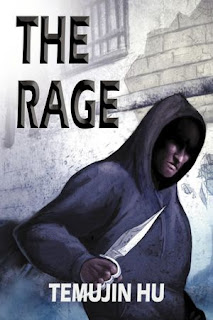
Temujin Hu - The Rage - Author Interview

Author Interview

1. Who is the plot based around?
ROLAND is a very discouraged and bitter young man who believes crime is his lot, and immerses himself in this role even to the point of murder.
NICOLAS is successful and comfortable with a loving family until Roland takes much of it away, and the depression becomes an obsession with revenge that leads to a criminal life.
VANESSA knows both men and cares for them, but when she chooses a career in law enforcement she is forced to hunt them down as criminals.
JANIE is a prostitute who crosses path with both men, encounters that change her life for the better until a criminal racket uses her as bait.
DARLENE is beautiful with a mystical power of seduction that she uses to control the various arms of this mysterious racket, which she serves loyally until her feelings get in the way.

2. What is the main idea of the plot?
Harsh times drive two men into increasingly horrific criminal behavior until they begin to struggle with their choices and the option of redemption becomes a distant dream. While one man seeks to build his own criminal empire starting with a small group of highly skilled miscreants, the other hunts him down with a ruthless obsession for revenge.

3. When does the plot take place?
It is contemporary without any references to a specific year. The story spans five years, Roland is 17 when it begins and he’s 22 when it concludes.

4. Where does the plot take place?
The story takes place in various cities in America with one chapter taking Roland’s gang to Mexico. Cities are not specifically named, allowing the reader to associate the characters with what is most familiar and drawing the reader more deeply into the story.

5. Why did the plot develop the way it did?
The question that drove the story was, “When does a wicked man lose all chance at redemption?” The characters had to be pushed into extremes of action to the point of seeming irredeemable while keeping them sympathetic enough that the reader never gives up hope on them changing.

This isn’t how the story idea began, though. I started with the question, “When is it okay to kill?” But as I grew in my Christian faith, the question became, “Why would a good man die for an evil man?” This was back in my more legalistic days; life has taught me that no one is truly righteous (least of all me), and that’s why I ultimately took away the “good” guy and made both men criminals. The theme determined the plot.

6. How did you come up with the idea for the plot?
My life experience infused itself into this story in more ways than I intended. I called the book The Rage because of my personal experience with depression, self-hate, and the sometimes erratic thoughts that I have had to battle. The “rage” experienced in the book refers to a strained emotional state that weakens character and judgment, causing bad decisions. There have been times I’ve felt capable of making the same choices as my characters, and yet strangely I’ve been able to manage my depressions without ever needing therapy. However, my mental health has not been culpable for all of my mistakes; I simply make enough bad decision to feel incapable of judging even the harshest of criminals. I had to tell a story about grace taken to an extreme.

Also, I’ve traveled all over the world as a student and for security work, and in the various jobs I’ve had I consistently meet people who tell me the same thing: people just don’t feel capable of being “good enough,” and give up trying. I’ve also met combat vets and seen how PTSD has changed their thinking, messed up their lives, and even altered their personalities. Trauma can drastically affect people. And I have worked with people out of a rehab who were trying to escape their lives of drugs and crime, and that’s a tough road to travel. It seems everything is stacked against these people who are honestly trying and struggling to get away from destructive lifestyles. All of these experiences affected the creation and development of Roland and Nicolas in the story.

One other thing: I grew up an Army brat, left home and joined the military, left the military to complete my degree, but then left America to do security in war zones. It should be no surprise that I am writing a story about killers.


About the Book

The Rage is a gripping drama of two young men whose lives become catastrophically entangled.

Roland's broken life drives him to the unthinkable crime of murder. This event destroys his emotional state and pushes him into a drug and murder binge, leading a darkly fascinated media to label him the “Red Ghost.” Although he fights to pull his life back together, his bitterness leaves him no other path but a criminal lifestyle, and he becomes an extraordinarily good criminal. He perfects his use of steroids, becomes a master thief, develops a network of criminal connections, and finally decides to put together his own gang. Along the way, he falls in love with another lost soul named Janie.

Nicolas is a young, ambitious businessman when he survives Roland's assault on his family. But the tragedy changes the course of his life as he obsesses over finding the young killer and training in various forms of combat to prepare himself for their next encounter. As he becomes a dangerous man, he falls away from normal society and loses his job along with any sense of the man he was. The sisterly affection of Vanessa, a friend of his wife, isn't enough to keep Nicolas from ending up living in alleys. He almost surrenders his quest for revenge before joining with a biker gang that crossed paths with Roland once.

After a few years and many sacrifices, both of these men begin to realize the depths of their depravity, but the path to redemption is not a straight one. Vanessa becomes a federal agent and finds herself hunting her friend like he was an outlaw while a mysterious criminal racket simultaneously tries to recruit Roland and kill off Nicolas. These events lead to a kidnapping and a conclusion that brings all of the characters together in a clashing that can only end in blood.

Price: Kindle: $0.99 Print: $15.99
Pages: 294
Genre: Inspirational Crime
Publisher: Badlander Publishing
Release Date: October 2012
Buy Links: Kindle, Amazon 


About the Author

Temujin Hu is a hard-working American living rather like a nomad. At 36 years of age, he's moved about 36 times and at one time or another called "home" California, Texas, Colorado, or five other states as well as Germany, China, and Kuwait. In 2003, he graduated from the University of Southern California with a B.A. in East Asian Languages and Cultures. He served over four years in the US Navy in the 90's and recently spent more than six years doing professional security in Los Angeles, Kuwait, Iraq, and Afghanistan. He also ran a small family-owned internet business for a couple years. He’s a Christian who spends a lot of time in the Word, and his interests include mixed martial arts, international relations, and dogs. Hobbies include hiking and shooting guns, but mostly he loves being an American and wants everyone to believe they can climb mountains.

Links to connect with Temujin:
Website  
Facebook  
Twitter  

Monday, October 8, 2012

Deb Elkink - The Third Grace - Author Interview

Author Interview

1. Who is the plot based around?
MARY GRACE KLASSEN (a.k.a. AGLAIA) is a big-city costume designer; FRANÇOIS VIVIER (a French summer exchange student) jilted Aglaia when he fled back to Paris fifteen years ago; DR. LOU CHAPMAN (Aglaia’s mentor) is a self-serving professor; EBENEZER MACADAM (Aglaia’s boss at Incognito Costume Shop) is a fine, mystical old gent who has her best interests at heart.

2. What is the main idea of the plot?
A costume designer, overwhelmed by memories of the summer she was seventeen and fell in love with the French exchange student visiting her parents’ farm, discovers amorous notes he jotted long ago into the margins of a Bible he left behind. She’s now on her way to Paris looking for her old flame—and herself.

3. When does the plot take place?
The story unfolds in “Aglaia’s” world today, with many flashbacks to the summer “Mary Grace” was seventeen.

4. Where does the plot take place?
The Third Grace is set on the streets of Paris, a farm in the sand hills of Nebraska, and the city of Denver.

5. Why did the plot develop the way it did?
My characters have strongly juxtaposed values. Aglaia, running from her past but unable to escape the memories, views her mentor as a model of success and the key to artistic validation; meanwhile, Dr. Lou Chapman is playing her. Eb MacAdam, Aglaia’s boss with his own life regrets, has plans to prosper her and give her a hopeful future. The plot grows out of the dark mythology that François murmurs into Aglaia’s ear, twisted in with elements of death, abandonment, and avarice, with friendship, faith, and family.

6. How did you come up with the idea for the plot?
I discovered a marble statue grouping in the Louvre on my first trip to Paris in 1989—a Greek Renaissance sculpture by James Pradier of The Three Graces. These goddesses became iconic for me and I decided to arrange my debut novel around them, as they symbolized the relationships between women as well as the twisted spirituality implicit in mythology—both relationship and theology of great interest to me. I was at this time still living on our isolated cattle ranch on the Canadian prairies, and the contrast between city and country, aesthetics and common sense, sophistication and practical living really hit home. I’d succumbed to the enchantment of French culture (the cuisine! the couture! the romantic language!) and wanted to explore the contrast between it and my own heritage rooted in the Mennonite faith—to say nothing of my intention to relive that teenaged feeling of falling in love.


Book Summary

Back when she was seventeen, Mary Grace fell in love with the French exchange student visiting her family’s Nebraska farm. François renamed her “Aglaia,” after one of the enchanting Three Graces of Greek mythology, and set her heart yearning for something more than her parents’ simplistic life and faith. Now, fifteen years later, Aglaia designs costumes in Denver, and her budding success in the city’s posh arts scene convinces her that she’s left the farm girl far behind. But “Mary Grace” has deep roots, as Aglaia learns during a business trip to Paris. Her discovery of sensual notes that François jotted into a Bible during the long-ago fling, a silly errand imposed by her mother, and the scheming of her sophisticated mentor all conspire to send her on a dual journey across oceans and time in a search for herself.

Price: $14.99
Pages: 306
Genre: Contemporary Women’s Fiction
Publisher: Greenbrier Book Company
Release Date: December 1, 2011
Buy Links: Amazon, Kindle, Amazon Canada, Barnes and Noble, Nook, Chapters/Indigo, Kobo


Author Bio

When author and city-slicker Deb Elkink fell in love and married an introverted cowboy, she moved from her bright lights to his isolated cattle ranch far off in the prairie grasslands. Still—between learning to pilot a light aircraft, sewing for a costume rental store, and cooking for branding crews of a hundred—Deb graduated with a B.A. in Communications from Bethel University in St. Paul, MN; she also holds an M.A. in Theology (both summa cum laude).

Her award-winning debut novel, THE THIRD GRACE, is set in the contrasting locales of Parisian street and Nebraskan farmyard, and incorporates Greek mythology and aesthetics with the personal search for self. Her writing has been described as “layered and sumptuous,” “compelling,” and “satisfying.”

Links to connect with Deb:
Web site
Facebook
YouTube

Monday, September 24, 2012

Elisabeth Doyle - War Stories: Short Fiction - Author Interview & Giveaway


About the Book

We all carry our own battle scars.

This is the premise of War Stories, a rich collection of short fiction that draws upon both the literal and figurative meaning of its title. Through a diverse array of characters, settings, and circumstances, War Stories delivers a series of powerful tales from the home front of war: the stories of parents, siblings, and spouses of those who have fought, as well as those who have returned from battle.

Set against the backdrop of contemporary conflicts, War Stories’ compelling nine narratives tell of a wounded veteran who seeks renewal through an imagined relationship with a neighborhood girl, a grieving father who finds peace and reconciliation at the site of a disastrous bus crash, a young woman who searches for identity and meaning in the wake of her husband’s injury, and an urban teenager engaged in a fateful standoff with local recruiters. Interspersed with these tales are powerful, non-traditional “war stories” – of youth, unexpected loss, and heartbreaking love.

War Stories’ thoughtful and beautifully crafted tales, which range in style from deceptively simple to rich and complex, tell of people young and old, male and female, who share two things: humanity and resilience. These diverse and deftly written stories are joined through Elisabeth Doyle’s remarkable style and ease in creating a universe full of despair, hope, and dreams. At turns tender and harsh, tragic and yearning, these stories will leave you wanting more.


Author Interview

1. Please tell us about your current release.
War Stories is a lean collection of short fiction – nine stories – many of which are set against the backdrop of contemporary conflicts, including the war in Vietnam and current wars.

2. Can you tell us about the journey that led you to write your book?
In January 2002, I traveled for the first time to the country of Vietnam. I went there on a bit of a lark – a childhood friend of my mother’s was working there and had extended a kind of “open invitation” to visit. For some reason, I decided to go. Maybe I shouldn’t say “for some reason” – I was born during the war in Vietnam, and the conflict endured throughout my early childhood. I had vague memories of the images of war that flickered on our small television screen each evening. Usually, these images were mere background to our lives – they played out as my mother cooked dinner. No one seemed to pay great attention. I also had vague recollections of the scenery of Vietnam – some mountains and a village. I’m not sure where or when I saw those early childhood images – perhaps on a news program, or in a later documentary.

In any event, I traveled to Vietnam in 2002, and it’s safe to say that the experience changed my life, and opened for me new doors of interest, of passion, and of compassion. I returned with a deep and abiding interest in the war in Vietnam, its history, and its effect on American soldiers and Vietnamese citizens. I read – and continue to read – anything that I can get my hands on regarding the war. I focused primarily on first-hand autobiographical accounts by soldiers.

I had a background in fiction writing, but hadn’t written a short story in years. When I relocated to Washington in late 2006, I resolved to return to writing, mostly at the urging of my mother and grandparents. Away from the distractions of family and familiarity, in a new city, I was able to find the peace in which to write. It should be noted that I did not set out to write a collection of short stories on the topic of war. In fact, I did not set out to write a collection, at all. I just wrote – one story after another. And what I found, as I wrote, was that the theme of war continued to assert itself in each of these stories, in one way or another. After years of reading and learning, war had apparently become the foremost, organizing principle in my mind; the circumstance around which all other things revolved. It emerged as a theme that linked all of the new stories that I wrote, without conscious or deliberate effort or planning on my part.

It should be noted that these are not combat stories, nor do they attempt or purport to be historically accurate or to give voice to the actual experience of those who have fought. Only those who have had to fight, or who have lived in a war zone, can truly understand that experience. These stories are just that – stories – written with the deepest respect and empathy for those who have found themselves in such extreme circumstances, and who have faced the kind of difficult, unforgiving choices that most of us can only imagine.

3. Can you tell us about the story behind your book cover?
Sure. Well, suffice it to say that the book cover underwent a lot of changes, much to the annoyance of the cover designer, who (nonetheless) was a wonderfully good sport about it. It was important to me to create a cover that was NOT obviously rooted in or reflective of the topic of war. This was so because, first, the title “War Stories” is used both literally and figuratively. That is, while the majority of stories in the collection are set against the backdrop of war, other stories are not. These additional tales reflect “war stories” of another kind – the kind that we might all experience. So I wanted the cover to encompass all the themes in the book.

I chose to use a triptych of photos - a series of photos that could each be traced, if a reader so desired, to one or more of the stories in the collection. The characters in the photos are loosely representative of several of the characters in the book.

4. What would you say is your most interesting writing quirk?
I tend to write in a “spare” style, and make a deliberate, conscious effort to avoid sentimentality or over-statement of any kind. That’s just me. I don’t know that I succeed, but I try to convey the characters’ circumstances and states of mind without excess or manipulation of the reader. I also deliberately write without any “message” or agenda in mind. None of these stories, even those that are set against the backdrop of war, are intended to convey any kind of political message, and none of them were written with any kind of agenda or judgment. I wouldn’t even begin to know how to write a story with an agenda or message in mind. In general, I write short stories as a series of vignettes – as moments in time, things that happened - from which the reader can draw his or her own conclusions, messages, etc. I prefer to leave the interpretation of the “meaning” of my stories in the hands of the reader.

5. Open your book to a random page and tell us what’s happening.
I did as you asked and opened the book to a random page. It happens to be the first page of the story “The Deepest, Darkest Part of the Woods,” on page 53. This happens to be one of my favorite stories, and one of the last in the collection that I completed. It’s one of the stories in the collection that takes the most risks, I think, and revolves around a young veteran who returns to his suburban neighborhood and struggles to re-integrate. This first page is also one of my favorites in the book, as it describes the return of this young man – and others like him – into a familiar setting that is now entirely unfamiliar to him.

***

War Stories: Short Fiction can be purchased at:
MyBookOrders.com

Price: $14.95 paperback
ISBN: 9781937928407
Pages: 119
Release: August 7, 2012


About the Author

Elisabeth Doyle is a writer and attorney living in Washington, D.C. She studied fiction writing at Sarah Lawrence College and the University at Albany, and is completing a Masters of Laws Degree at Georgetown University Law Center. Ms. Doyle’s short fiction was published in the literary journal Nadir and was awarded the University at Albany’s Lovenheim Prize for best short fiction. Her first short film, Hard Hearted One, was admitted into the Philadelphia Festival of World Cinema and the Street Films Film Festival, and was shown on Public Television and Manhattan Cable. War Stories is her first collection of short fiction.

Connect with Elisabeth:
Web Site
Blog Tour Site


About the Giveaway

a Rafflecopter giveaway

Thursday, July 12, 2012

Janiera Eldridge - Soul Sisters - Author Interview

Author Interview

1. Who is the plot based around?
The first book is based more around Dana who is the human sister.

2. What is the main idea of the plot?
The main idea of the plot is that twin sisters Ani and Dana (Ani is a vampire and Dana is not) are trying to find away to save themselves from execution. Ani has made a very public display of her vampirism and their leader Donovan wants to get rid of the both of them. Neither one is going down without a fight.

3. When does the plot take place?
Soul Sisters take place between past time periods and the present. The book flocculates between the past and the future to give a well rounded background of some of the main characters.

4. Where does the plot take place?
The book features many different locations Switzerland, San Diego, Harlem New York. There are some really great locations all though out.

5. Why did the plot develop the way it did?
I really believe I started off with a plot idea in my head but as I wrote the plot and characters took over and wrote themselves. Sometimes I got writer’s block but other times it was smooth sailing. I just let the characters talk to me and the events unfolded on their own.

6. How did you come up with the idea for the plot?
I was watching something about how close twins are and even if they grow up apart they still lead similar lives. The idea just came to me: what if you had twin sisters and one is vampire while the other is a human. What kind of trouble would they get into? The answer is…. a lot!


About the Book

Soul Sisters is an urban fantasy novel about African-American twin sisters Ani and Dana who have a rather unique secret: one sister is human while the other is a vampire. While the sisters have lived peacefully with each other for many years one fateful night will change both their lives forever. When a drunken man tries to attack Dana (the human sister) Ani (the vampire sister) protects her sister with all of her ferocious power.

However, when the vampire’s leader Donovan finds out about the public display he calls for the sisters to be assassinated for disobedience. Ani and Dana now are in for the fight of their lives to protect each other as well as the lives of their dedicated friends who have joined them on their mission for survival. If Dana and Ani can make it through this time of uncertainty, Ani can take her new place as vampire queen.

Soul Sisters is expected to be a trilogy; The book also features a multicultural cast of characters that brings a new edge of chic to the vampire world.

Genre: Urban Fantasy
Publisher: Self-published
Release Date: May 23, 2012
Formats/Prices: $10 paperback, $2.99 ebook
Buy Links: CreateSpace, Kindle


About the Author

 Janiera enjoys feeding her  book addiction when she not writing. She is also a book blogger at Beauty and Books where she mixes being a book nerd with keeping things chic. When not reading or writing she is freelance writing in the entertainment industry. Soul Sisters is her debut novel.

Links to connect with Janiera:
Blog

Twitter

Facebook
Pinterest
Goodreads